
Best Time of Day to Visit the Pantheon (and How to Avoid Crowds)
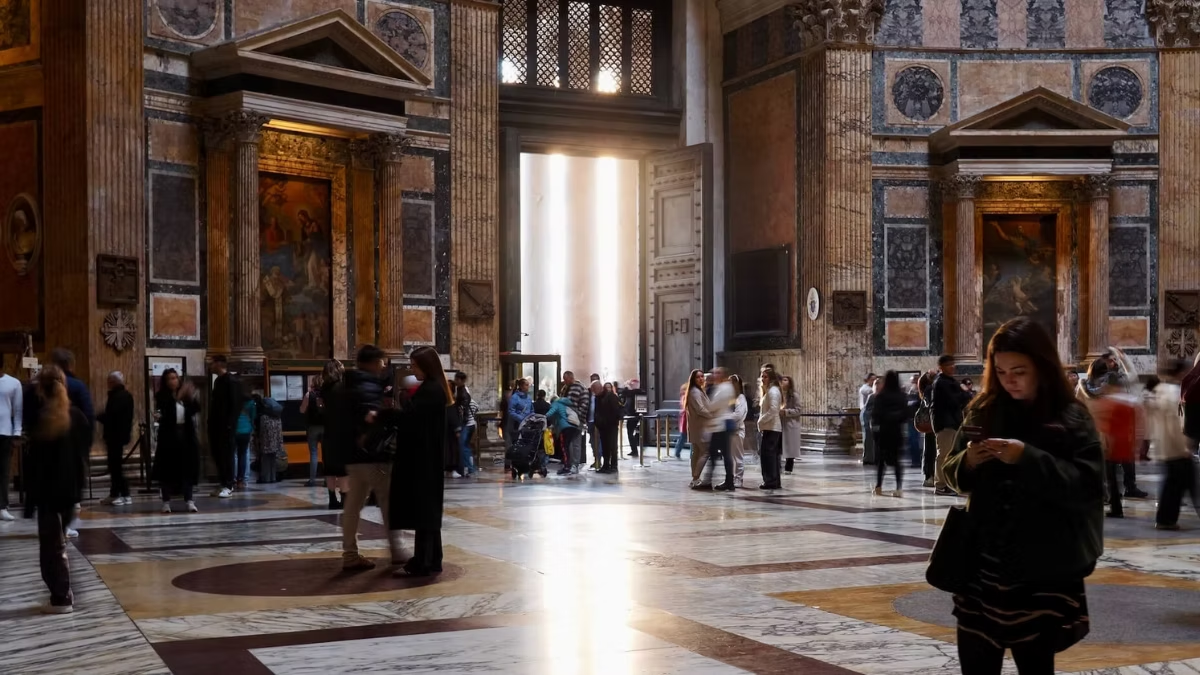
The best time to visit the Pantheon is either immediately after opening (09:00–10:00) or in the late afternoon (after 15:00–16:00) on a weekday. The worst time is between 10:00 and 14:00, particularly in peak season (April–October), when the interior holds around 800 people and walk-in purchase queues can exceed 45–60 minutes. Monday and Tuesday are consistently the quietest days of the week. Spring (April–May) and autumn (September–October) offer the best balance of good weather and manageable crowd levels.
The Pantheon attracts over nine million visitors a year — making it one of the most visited monuments in Europe — and the difference in experience between visiting at 09:15 on a Tuesday morning and visiting at 12:00 on a Saturday in July is profound. This guide breaks down exactly when to go, why the crowds behave the way they do, and what the oculus light looks like at different times of day.
The Two Best Daily Windows
After 15:00 on weekdays, the Pantheon’s crowds diminish significantly as tour groups and midday visitors move on. By 16:00–17:00, the interior is considerably quieter than at midday. Late afternoon is also when the oculus light creates warm, lower-angle effects in summer and autumn.
Window 1: First Hour After Opening (09:00–10:00)
The first 45–60 minutes after opening offer the closest thing the Pantheon has to a quiet visit. Most tourists are still at breakfast, navigating their hotel, or making their way from accommodation further from the historic centre. The interior, which can hold around 800 people at peak, is typically occupied by a few dozen visitors in this window. You can position yourself directly under the oculus without being jostled, spend time at Raphael’s tomb without a crowd, and experience the building at something approaching the scale and serenity it was designed to evoke.
The light quality at this hour is also excellent. In the morning, the oculus casts a low-angle beam that travels along the western wall as the sun rises — a moving shaft of light that changes position minute by minute and creates some of the most dramatic interior photographs possible.
The practical challenge: Pre-booking is essential. Popular morning slots — particularly at 09:00 and 09:30 — sell out quickly in peak season, sometimes two to three days ahead. Book early in the preceding month when tickets are released. For full booking guidance, see our Pantheon Tickets guide.
Window 2: Late Afternoon (After 15:00 on Weekdays)
The early-to-mid afternoon peak (10:00–14:00) subsides from around 15:00 as group tours conclude their morning programmes and visitors disperse to restaurants and other sights. From 15:00 onwards — and particularly from 16:00 — the Pantheon’s atmosphere becomes noticeably calmer. This window is especially useful for visitors whose schedules don’t allow an early morning start, or who are using the morning for other nearby sights like Piazza Navona or the Trevi Fountain first.
In summer, the late afternoon also brings a welcome drop in temperature both inside and in Piazza della Rotonda outside. The interior of the Pantheon is naturally cooler than the piazza, thanks to its massive concrete walls — but the entrance area and security queue are exposed, and a cooler time of day makes this easier.
One caveat: On Saturdays, the 17:00 Mass means ticket sales suspend from 16:00. If you plan a late afternoon visit on a Saturday, aim for a 15:00–15:30 entry slot rather than leaving it to 16:00 or later.
Worst Times to Visit
10:00–14:00 in Peak Season
This is the most consistently crowded window of any visit. In the peak months of June, July, and August, the Pantheon interior approaches or reaches its 800-person capacity during this window. Walk-in purchase queues can stretch the full length of Piazza della Rotonda. Even pre-booked visitors face a 10–20 minute security queue on arrival. The experience inside during this window — with several hundred people moving around the single-room interior — is fundamentally different from a quieter early morning visit.
Weekends Year-Round
Saturday and Sunday visits consistently attract larger crowds than equivalent weekday slots. Weekend visitors tend to arrive later in the morning, meaning the 10:00–13:00 window on Saturdays and Sundays is particularly busy. If you have a choice between a weekend and weekday visit, opt for the weekday. Monday and Tuesday are the quietest days of the week overall.
Free Sundays
The first Sunday of each month is the single most crowded day of any given month. The combination of free entry and no online booking creates extremely large queues from early morning. If you visit on a free Sunday, arrive before 09:00. For most visitors, the experience offered by the €5 standard ticket on a quiet weekday morning is superior in every practical way.
Best and Worst Times by Season
Peak Season: June, July, August
The most demanding time to visit. Interior crowds are at their highest; outdoor queues are longest; temperatures in the piazza are hottest. The early morning window (09:00–10:00) is the only reliable way to avoid the worst of it. Pre-booking is non-negotiable — slots sell out several days ahead. If visiting in summer, book your slot the moment tickets are released for your month.
Shoulder Season: April–May and September–October
The best overall time to visit the Pantheon. Weather is mild and pleasant, daylight hours are long, crowd levels are meaningfully lower than midsummer, and the experience at almost any time of day is better than the equivalent in July. In May and September particularly, even the 10:00–12:00 window is manageable with a pre-booked ticket.
Low Season: November–March (Excluding Christmas)
The quietest overall period. Walk-in queues are shorter, the interior is less densely packed, and any time slot offers a more relaxed experience. The trade-off is cooler temperatures and shorter days. Note that the Christmas holiday period (late December through early January) brings a spike in visitor numbers — it is not representative of low season generally. Excluding that spike, January and February are the quietest months of the year.
The Oculus: When the Light Is Best
The Pantheon’s oculus — the 8.9-metre circular opening at the dome’s apex — is the building’s most photographed feature, and the quality of the light it admits changes dramatically throughout the day and year.
Morning (09:00–10:30): The sun is low in the eastern sky, and the beam enters the oculus at a steep diagonal angle, striking the western wall. The light is sharp and directional, creating a strong contrast between the illuminated wall and the darker interior.
Midday (11:00–13:00): As the sun rises higher, the beam becomes more vertical and eventually points almost straight down toward the floor. At the spring and autumn equinoxes, the midday beam strikes specific architectural elements — a deliberate alignment built into the building by Hadrian’s architects.
April 21 at noon: The most celebrated light event of the year. On Rome’s traditional founding date, the midday oculus beam illuminates the bronze entrance doors in a disc of golden light — an astronomical alignment believed to be entirely intentional.
Pentecost: During the Pentecost Mass, rose petals are dropped through the oculus into the interior — one of the most extraordinary spectacles the Pantheon offers, visible only on this one day each year. Entry is for worshippers only during the Mass itself.
Afternoon (14:00–18:00): The beam shifts to the eastern side of the interior. In summer, the afternoon angle creates warm, golden light effects on the floor and eastern niches.
Rain: The oculus is open to the sky. When it rains, water falls through the opening onto the marble floor and drains through the ancient hydraulic system beneath the surface. Visitors may remain inside during rain, and a thunderstorm viewed from below the oculus is one of the most dramatic experiences the Pantheon offers.
How Far in Advance to Book
| Season | Recommended Booking Lead Time |
|---|---|
| Peak (June–August) | 5–7 days minimum; 2 weeks for popular slots |
| Shoulder (April–May, Sept–Oct) | 3–5 days |
| Low Season (Nov–March) | 1–3 days; same-day sometimes possible |
| Weekends year-round | Always book at least 3–4 days ahead |
Tickets for each calendar month are released in the middle of the preceding month via the official Musei Italiani portal.
Practical Tips for Timing Your Visit
- Arrive 5–10 minutes before your slot to allow for travel through the piazza, which can be crowded at peak hours
- Budget 10–20 minutes for security regardless of when you visit
- Download your QR code before leaving — mobile signal can be unreliable near the Pantheon during peak hours
- Check the first Sunday schedule — if your visit falls on the first Sunday of the month, no online booking is available and you must queue for a free ticket on arrival
Frequently Asked Questions
What is the least crowded time to visit the Pantheon?
The first hour after opening (09:00–10:00) on a weekday, particularly Monday or Tuesday, in the low season (November–March outside of Christmas). In any season, the early morning window is the most reliable way to avoid large crowds.
Is the Pantheon busy on Sundays?
Yes. Sundays are among the busiest days of the week, particularly on the first Sunday of each month (free entry day) and during peak season. The Sunday morning Mass at 10:30 also means ticket sales are suspended from 09:30.
What time should I arrive at the Pantheon?
For a morning visit, book the earliest available slot (usually 09:00 or 09:30) and arrive at the piazza 10 minutes before your slot time. For an afternoon visit, 15:00–16:00 on a weekday offers a good balance of lower crowds and comfortable temperatures.
Is the Pantheon worth visiting in winter?
Absolutely. Low season visits (November–February) offer the most relaxed experience of the year. The building is spectacular in any conditions, and the interior is naturally cool in winter — considerably less uncomfortable than in the summer heat.
Does it matter what time of day I visit for the light?
Yes, significantly. Morning light (09:00–10:30) creates a sharp diagonal beam on the western wall. Midday light approaches vertical. Afternoon light shifts to the eastern side. Each has its own photographic quality. For the famous oculus-pointing-at-the-floor shot, midday is best; for wall-lighting drama, early morning is superior.
